
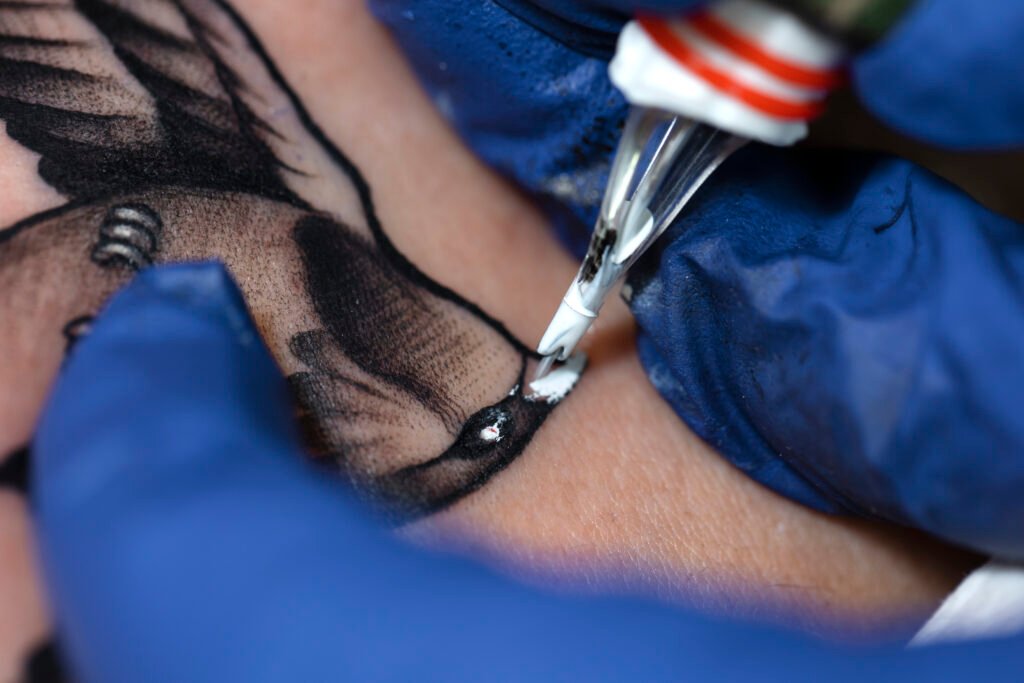
Tattoo Removal Laser
Laser tattoo removal works by breaking down tattoo ink particles into smaller fragments using concentrated light pulses, which are then naturally eliminated by the body’s immune system. This process typically requires multiple treatment sessions and is considered a safe and effective method for tattoo removal.
What is Laser Tattoo Removal?
Laser tattoo removal is a non-invasive procedure that uses high-intensity light beams to break down tattoo ink particles in the skin. Over time, the body’s immune system naturally clears these broken particles.
How It Works
Laser Targets Ink – The laser emits short pulses of light that are absorbed by the tattoo’s pigment.
Ink Breaks Down – The heat causes the ink particles to shatter into tiny fragments.
Body Clears the Ink – White blood cells carry away these particles through natural processes.
Multiple Sessions Needed – Each session removes a layer of pigment; the number depends on tattoo size, colors, and depth.
Common Laser Types
Q-Switched Nd:YAG Laser – Works well for black, blue, and dark colors.
Q-Switched Ruby Laser – Good for blue and green inks.
Q-Switched Alexandrite Laser – Effective for green, black, and blue pigments.
Pico Laser – Uses ultra-short pulses, often faster results and less skin damage.
Procedure Steps
Consultation – Skin type, tattoo color, and age of tattoo assessed.
Preparation – Area cleaned; numbing cream may be applied.
Laser Session – Protective eyewear worn; laser pulses delivered.
Post-care – Cooling gel or ice pack applied to reduce redness and swelling.
Benefits
Non-surgical and precise.
Minimal damage to surrounding skin.
Can fade or completely remove tattoos.
Effective on most colors (with advanced lasers).
Limitations
Requires multiple sessions (4–10+ depending on tattoo).
Light colors (yellow, white, light green) are harder to remove.
May not restore skin to exact pre-tattoo state.
Can be expensive.
Possible Side Effects
Temporary redness, swelling, or blistering.
Changes in skin pigmentation (lighter or darker spots).
Mild discomfort during the procedure.
Rare scarring if aftercare isn’t followed.
Aftercare Tips
Keep the treated area clean and dry.
Avoid sun exposure for at least 4 weeks after each session.
Use prescribed ointments to prevent infection.
Avoid scratching or picking scabs.
Follow the recommended gap (usually 4–8 weeks) before the next session.
💡 Pro Tip: The newer the tattoo, the harder it usually is to remove completely, as the pigment is still dense. Older tattoos tend to fade faster with laser removal.