
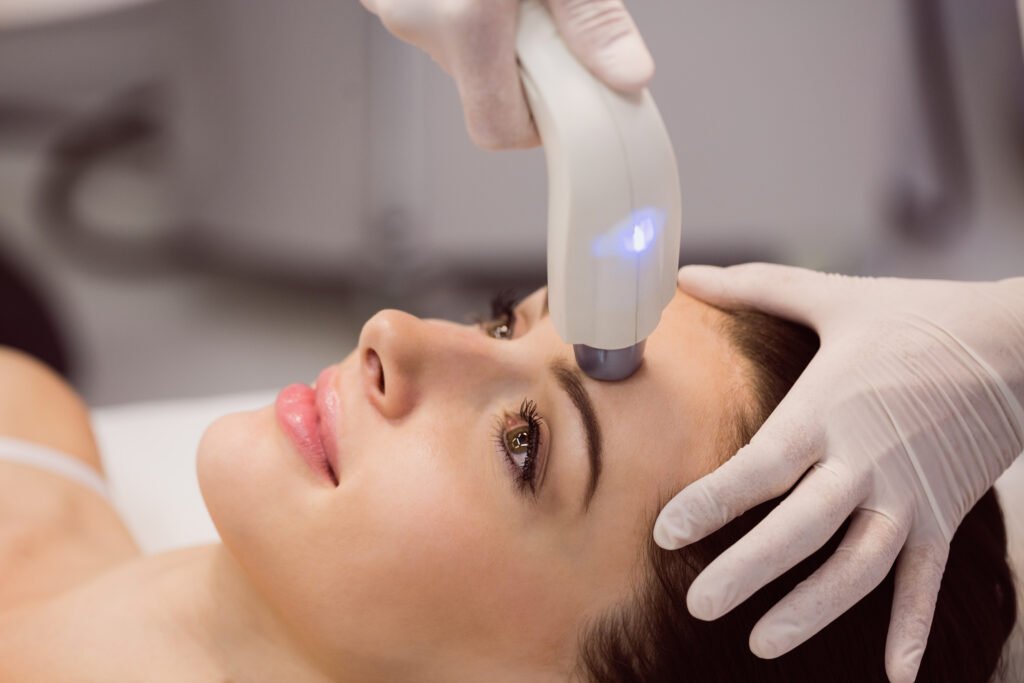
Laser Skin Toning
Laser skin toning is a cosmetic treatment that uses laser energy to improve skin tone and texture by stimulating collagen production and reducing pigmentation issues. It’s a non-invasive procedure that can help with issues like sun damage, wrinkles, and uneven skin tone, resulting in a brighter, smoother complexion.
What is Laser Skin Toning?
Laser skin toning is a non-invasive dermatological treatment that uses specific laser wavelengths (often Q-switched Nd:YAG lasers) to improve skin tone, texture, and pigmentation.
It targets melanin and stimulates collagen production to brighten and rejuvenate the skin.
How it Works
Laser Energy Delivery – The laser emits controlled pulses of light at specific wavelengths (commonly 1064 nm for deeper layers, 532 nm for superficial pigmentation).
Melanin Breakdown – Pigment particles absorb the laser energy, breaking down into smaller fragments that are removed by the body’s immune system.
Collagen Stimulation – Heat from the laser also triggers the production of new collagen, improving firmness and smoothness.
Minimal Downtime – Unlike aggressive resurfacing lasers, toning uses lower energy to avoid skin damage.
Benefits
Reduces uneven pigmentation, tanning, and dark spots
Improves skin brightness and clarity
Minimizes fine lines and enlarged pores
Stimulates collagen for anti-aging effects
Helps with mild acne scars and dull skin
Suitable for all skin types, including darker tones
Common Uses
Melasma treatment
Sun damage repair
Skin brightening
Post-acne pigmentation
Early signs of aging
Procedure
Cleansing – The skin is cleaned to remove dirt and makeup.
Eye Protection – Safety goggles are worn.
Laser Session – Laser handpiece is moved over the skin in multiple passes.
Cooling – A cooling device or gel may be used to reduce discomfort.
Moisturizer + Sunscreen – Applied after treatment.
Duration: 20–45 minutes per session
Sessions Needed: Usually 4–8 sessions spaced 2–4 weeks apart for best results.
Aftercare
Avoid direct sun exposure for at least 1–2 weeks.
Apply broad-spectrum sunscreen daily.
Avoid scrubbing or exfoliating for 3–5 days.
Keep skin hydrated.
Possible Side Effects
(Mild and temporary)
Redness
Mild swelling
Warmth in the treated area
Serious complications are rare if done by a qualified dermatologist.
Results
Gradual improvement after each session
Brighter, more even skin tone over time
Maintenance sessions every 3–6 months may be recommended