
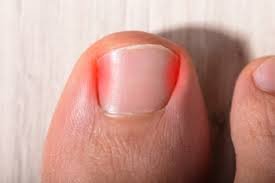
Nail Avulsion (Dermatological Perspective)
Nail avulsion is a medical procedure—either surgical or chemical—in which part or all of the nail plate is removed. It’s one of the most common interventions in nail medicine, performed under local anesthesia by dermatologists, podiatrists, or surgeons.
Types of Nail Avulsion
Partial Nail Avulsion: Only a portion of the nail (typically the ingrown edge) is removed. This is frequently used to treat ingrown toenails and is usually sufficient for most cases.
Total Nail Avulsion: The entire nail plate is taken off, generally reserved for more severe, chronic, or unresponsive conditions.
Methods Employed
Surgical Avulsion: The nail plate is mechanically removed after numbing the area. Often performed using a distal approach (lifting from the hyponychium) or, less commonly, a proximal approach (starting from the proximal nail fold).
Chemical Avulsion: A topical agent—commonly containing 40% urea—is applied to soften the nail, facilitating its removal over several weeks. This approach avoids some surgical complications.
Indications of Nail Avulsion
Nail avulsion is employed for both diagnostic and therapeutic purposes:
Diagnostic Uses:
To explore underlying issues in the nail bed or matrix—such as dermatoses, infections, connective tissue disorders, tumors, or pigmentation changes like melanonychia.
To facilitate biopsies for accurate diagnosis.
Therapeutic Uses:
Chronic onychomycosis (fungal nail infections) unresponsive to medication.
Ingrown toenails (onychocryptosis) and structural deformities like pincer nails.
Persistent paronychia, warts, nail unit tumors, retronichia (proximal nail plate ingrowth), and other recalcitrant nail disorders.
Procedure & Aftercare
Preparation & Anesthesia:
The digit is cleansed, and local anesthesia is administered to ensure comfort.
Removal:
Surgical: Nail is clipped, lifted, and excised.
Chemical: Urea paste is applied and occluded with tape for softening before gentle removal over time.
Post-Procedure Steps:
The wound is dressed and kept clean and dry. A protective layer forms over the exposed nail bed within a few weeks.
Expected healing time varies:
Fingernails: ~3–6 months
Toenails: Up to 12–18 months
Complications to Watch For:
Infection: Symptoms like increased pain, redness, swelling, discharge, or fever warrant immediate medical attention.
Allergic reactions: Possible with ingredients such as benzoin or zinc oxide in chemical avulsion.
Summary Table
| Aspect | Details |
|---|---|
| Purpose | Diagnostic (explore, biopsy) and therapeutic (fungal, ingrown, tumors, deformities) |
| Approaches | Distal (common) and proximal |
| Methods | Surgical removal or chemical (urea-based) avulsion |
| Procedure Steps | Local anesthesia → nail removal → protective dressing |
| Healing Time | Fingernail: up to 6 months; Toenail: up to 18 months |
| Aftercare | Clean, dry dressing; monitor for infection |
| Risks | Infection, allergic dermatitis, potential regrowth issues |